
The Older Persons Poverty Monitor
Aotearoa New Zealand has no adult measure of poverty, and despite reports of rising hardship among over 65s there was no widely accepted definition and monitoring framework for Older Persons Poverty. This project fills this crucial gap in the data.
How we measure Older Persons Poverty
FAQS
What is the Older Persons Poverty Monitor?
For the first time ever, the Older Persons Poverty Monitor has measured poverty and hardship experienced by older people (aged 65 and over) in Aotearoa New Zealand.
Developed by the New Zealand Council of Christian Social Services (NZCCSS), the Monitor brings together nationally available data to provide a clearer picture of the challenges older people face and where action is needed. The Monitor is intended to support better understanding, informed public discussion and evidence-based policy that helps ensure everyone can age with dignity.
Why has the Older Persons Poverty Monitor been created?
There has not previously been a consistent, comprehensive way of understanding and tracking poverty among older people in Aotearoa New Zealand. The Monitor fills this gap by providing a shared framework for understanding how poverty affects older people and how experiences differ across communities.
This provides communities, service providers and decision-makers with a stronger evidence base to identify where change is needed and track progress over time.
How was the Older Persons Poverty Monitor methodology developed?
The Older Persons Poverty Monitor draws on established approaches to measuring poverty in Aotearoa New Zealand, building on the experience of existing poverty measurement frameworks, including the approach used to measure child poverty under the Child Poverty Reduction Act 2018.
Developed through engagement with older people, sector organisations and other experts, these groups have helped shape both the definition of poverty used in the Monitor and the five domains and measures used to understand the different ways poverty can affect older people. The result is a consistent and transparent framework designed specifically to understand poverty in later life, to be progressively tracked.
What does the Monitor measure?
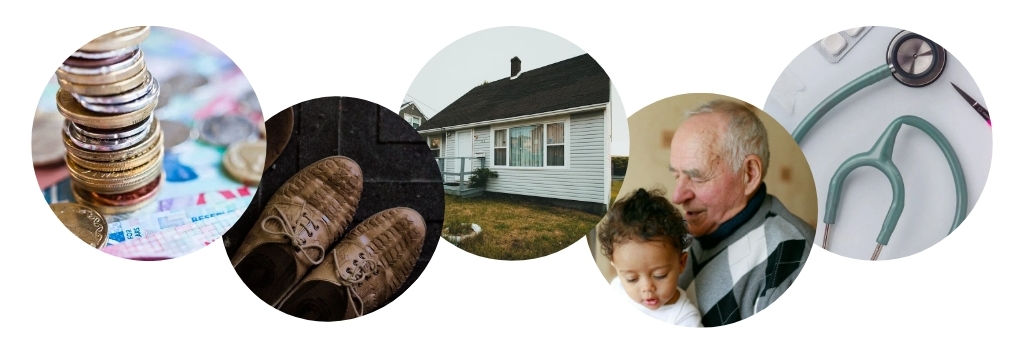
The Monitor measures poverty across five domains that together reflect whether older people have the resources, security and support to live well:
- Income
- Essentials
- Housing
- Connection
- Health
How does the Monitor define older persons poverty?
The Monitor defines older persons poverty as:
“The state of having insufficient resources, security, and support in one’s community to live, age and die with dignity.”
This definition was co-developed through consultation with older people, researchers, community organisations, service providers and NZCCSS member organisations.
Why does the Monitor measure more than income?
Income is only one part of poverty. Someone may have an income above a poverty threshold but still struggle to afford healthcare, live in insecure housing, experience loneliness, or go without essential items. The Monitor recognises that poverty affects many aspects of people’s lives and measures these together to provide a more complete picture of wellbeing.
What are the key findings from the 2026 Monitor?
The inaugural Monitor shows that too many older people experience hardship that often goes unseen. Key findings include:
- 25,000 older people are living without essential items.
- Nearly one in five older people delayed visiting a doctor or dentist because of cost.
- Around one in six older people are living in a home they do not own.
- Women experience higher rates of hardship across every measure.
- Māori and Pacific older people experience disproportionately high levels of poverty.
- Loneliness remains a significant issue, particularly for people aged 85 years and over.
Together, these findings demonstrate that poverty in older age is shaped by a combination of financial, social and structural factors.
Does the Monitor rank regions or communities?
The Monitor reports differences between regions and population groups where reliable national data is available. Its purpose is not to rank communities but to identify where hardship is occurring and where additional support or policy attention may be needed.
Why are some groups more affected than others?
The Monitor shows that poverty is not experienced equally. Historical and structural inequalities (including differences in lifetime income, housing opportunities, health outcomes and access to support) mean some groups experience greater hardship than others. Understanding these differences helps ensure responses are targeted where they are most needed.
How often will the Monitor be updated?
NZCCSS intends for the Older Persons Poverty Monitor to become an ongoing measure of poverty among older people. Regular updates will allow trends to be tracked over time, helping assess whether New Zealand is making progress towards reducing poverty and improving wellbeing in older age.
How is the data collected?
The Monitor brings together existing national datasets collected by government agencies. It does not collect new survey data. Instead, it combines trusted, publicly available information into a single framework that reflects the lived experience of older people.
Full details of the data sources are available in the accompanying report and interactive dashboard.
What does NZCCSS hope the monitor will achieve?
The Monitor is designed to improve understanding of poverty among older people and support better decision-making. NZCCSS hopes it will:
- improve public understanding of poverty in later life
- support evidence-informed policy and investment
- help communities identify where support is needed
- enable progress to be measured over time
- contribute to a New Zealand where everyone has enough resources, security and support to live, age and die with dignity.
How do we free older New Zealanders from poverty?
Poverty among older people is not inevitable. But change requires policy choices that ensure people have adequate support throughout their lives. NZCCSS has identified several opportunities for positive change:
- Measure and address poverty across the life course
Introduce a Poverty Reduction Act that measures and targets poverty rates for all New Zealanders, with specific reporting and targets for populations experiencing higher levels of hardship, including older people. - Ensure people can access support before hardship becomes a crisis
Increase asset thresholds for accessing Special Needs Grants and third-tier assistance, so people do not have to exhaust their savings before receiving help when they need it. - Improve housing security for older people
Increase social housing supply over time to bring Aotearoa New Zealand closer to the OECD average of 7% of housing stock, helping ensure more people have access to secure, affordable homes. - Remove barriers facing older renters
Remove asset thresholds for Accommodation Supplements for people who are renting and do not already own a property, recognising that housing costs can create significant hardship for older renters.
- Measure and address poverty across the life course
How does this relate to NZCCSS' wider poverty work
The Older Persons Poverty Monitor complements Kua Mahue | Left Behind: Poverty in Aotearoa 2026 which examines poverty across the life course.
Pēhi taumaha ana te wairua o te koeke,
mā te hapori aroha ia e hā pai
With gratitude for funding from:
The Methodist Church of New Zealand
Louisa and Patrick Emmett Murphy Foundation
The Selwyn Foundation