

Welcome to this month’s issue of Weaving Policy from the New Zealand Council of Christian Social Services (NZCCSS). We’re excited to bring you member insights, updates on our work, and opportunities to engage across the social service sector.
You can jump to the section most relevant to your work:
- Tō Tātou Rāngai | Our Sector
- Ōritetanga me te whakaurunga | Equity & Inclusion
- Kaumātua | Older People
- Tamariki | Children

Meeting together
The New Zealand Council of Christian Social Services (NZCCSS) is supported in all the work it does by three working groups made up of representatives from our membership organisations. These groups cover our three main workstreams: Children, Equity and Inclusion and Older People.
We were lucky enough to bring these groups together in person this month to connect, share and learn. Group members shared the challenges being faced in their communities, the passion and commitment to the people they serve and the ongoing innovation and collaboration. Thank you to all our members who attended, to the guests who shared their contributions and the Wellington City Mission’s kaimahi at Whakamaru, who hosted us.
Free From Poverty – Election 2026
This month NZCCSS finalised our policy asks to political leaders. Based on feedback from our member organisations and the people they work with, as well as other sector leads and experts, we are calling on our political leaders to free New Zealanders from poverty.
We recognise that reducing poverty and hardship is fiscally expensive and will require further revenue generation or borrowing, however we believe it costs too much not to address this issue. If we continue to let poverty increase, we put at risk social and economic progress in Aotearoa, due to reduced productivity and social cohesion, and higher public expenditure and lower revenue in the long-term.
The most recent data shows that almost half a million New Zealanders are living without the basics. Hardship and poverty are not inevitable. We have outlined our recommended plan for freeing New Zealanders from poverty. Click on the button below to read them.
If you want to get involved or support this work, please email Alicia on ceo@nzccss.org.nz
Ka kite Dr Ang Jury
NZCCSS CEO Alicia Sudden joined many other social sector organisations, officials and other kaimahi to farewell Women’s Refuge CEO Dr Ang Jury ONZM. The farewell speeches highlighted the huge amount of respect and admiration for her work. We are looking forward to welcoming Ang in her next role as the new Chair of the Board for the Independent Children’s Monitor.


Walking alongside whānau to create lasting change
It’s a well-known fact that Māori are disproportionately affected by family and sexual violence in Aotearoa.1 Breaking this inter-generational cycle of violence is challenging, especially when connection to culture and its values have been lost.
Te Whare Ruruhau o Meri Trust (Te Whare) is a kaupapa Māori social services provider. We walk alongside whānau, supporting them to overcome family and sexual violence. We also provide social work services, advocacy and support services, under the auspice of Te Hāhi Mihingare – the Māori Anglican Church. Te Whare works alongside whānau to overcome inter-generational harm and the restoration of whānau wellbeing.
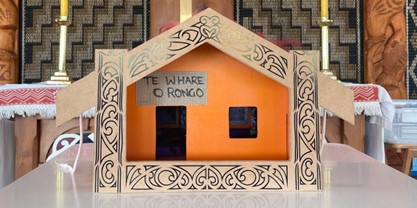
At the heart of that transformation is Te Kawa o te Marae, a tikanga-based framework that guides tāne and wāhine on their healing journey, breaking cycles of harm and creating safer futures for their tamariki.
A powerful framework for change
Te Kawa o te Marae© is a hands-on model that empowers whānau to reconnect with their culture and walk a path toward lasting change. Grounded in te ao Māori values, this proprietary framework supports transformation, providing whānau with a familiar structure to navigate conflict, rebuild respectful relationships, and restore their sense of mana, dignity and aroha.
The wharenui acts as a powerful metaphor where tikanga is the anchor that guides change. Tikanga grounded in kaupapa Māori principles helps whānau begin to understand that their own whare can be a sacred and safe place.
When they see that drugs, alcohol, violence and emotional abuse have no place in their home, and understand how this harms tamariki and whānau relationships, the change journey begins.
Te Kawa o te Marae© not only addresses the underlying cause of family and sexual violence – it restores mana, fosters cultural belonging and strengthens whānau from the inside. By connecting whānau to their wairuatanga and whakapapa, the framework draws on the interconnectedness of people, place and the natural world, upholding collective responsibility and intergenerational knowledge.
“By aligning our services with te ao Māori values, identity and worldview, we build better trust and engagement,” says Elizabeth Walker, Te Whare Tāhuhu | CEO. “It’s a framework that doesn’t need explaining – whānau get it, because it’s already in them. It empowers. It heals. And simply put, it works.”
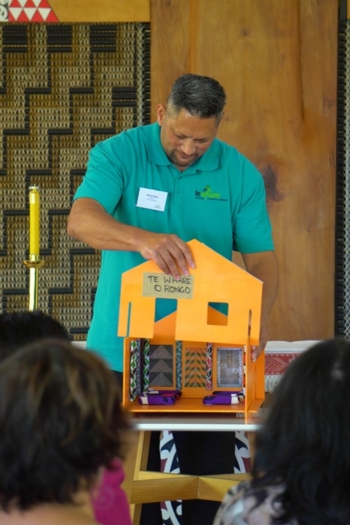
An independent evaluation by The Kingi Ihaka Research Centre2 highlighted the significant impact of Te Kawa o te Marae© as a tool for behavioural change. The report noted that the Te Whare Non-violence Programme has led to positive shifts in the lives of tāne and their whānau, creating meaningful improvements in relationships and wellbeing.
Delivering life-changing impact for whānau
“Te Kawa o te Marae© is an awesome concept,” says Aperahama, a recent graduate. “I think it worked for a lot of the other guys as well, because they were talking about how the vibe around their home was completely changed because they were no longer allowing this and that…and just showing more respect for the house.”
“All I know is … Te Whare works,” reflects a Te Whare Kaiako (teacher). “What I really like about it is that it’s under the Anglican Church. It’s under Christ. And whanau gravitate to it. Straight away, there’s respect.”
To learn more, visit tewhare.org.nz

MSD Contract Management System update
Changes to the Ministry of Social Development (MSD) social sector Contract Management systems came into effect on Monday 24th November. NZCCSS are part of the kotahitanga advisory group supporting MSD with this work.
These changes include the introduction of purchase orders for all active contracts, access to the Supplier/Partner portal and the introduction of electronic signatures for contracts. These aim to make participation in procurement easier by reducing the number of manual processes and streamlining payments, while also improving visibility of transactions.
A number of resources regarding these changes are available online, including guides on how to navigate the system and a webinar about the changes.
Alternatively, MSD can be contacted via email at community_information@msd.govt.nz
or via the MSD Contracted Services Helpdesk 0800 808 770 for support.
Scrutiny week
Scrutiny weeks, which were introduced in 2024, provide opportunity for the performance of government agencies to be examined. During scrutiny weeks the House does not sit, with select committees instead holding hearings, calling on Ministers and leaders of public service organisations to provide updates on spending and the outcomes being delivered.
While the June scrutiny week aims to examine the annual budget, the December one focuses on what government agencies have achieved with their money based on their annual reviews. The second and final scrutiny week of the year will be held from 1 – 5 December.
Scrutiny week select committee meetings can be accessed here to view online
Report on root causes of food insecurity

Kore Hiakai Zero Hunger Collective’s Ka Mākona 2025 report was released earlier this month, providing insights into the root causes of food insecurity currently experienced by roughly 25% of the New Zealand population.
In this 5th edition of the report, the modelling of income adequacy over 10 centres paints a bleak picture of the adequacy of income supports and the minimum wage in covering basic expenses, with the Jobseeker support in some modelled households up to $271 a week short.
Comparisons to the first year of the report (2021) highlight the significant increases in rent and food costs which have outpaced the increases in Jobseeker support and Minimum Wage. Rent has increased up to 41% for households while food costs have increased up to 34% in this same period. Additionally, this year’s report provides focus on older people and in particular older women as these groups are often disproportionately impacted by food insecurity.
Supporting the call for better housing solutions
NZCCSS was one of over 50 signatories to an open letter to Government calling on them not to consider legislation around banning or moving on unhoused people from Auckland’s city centre. We support the call for solutions that are just and compassionate including more funding for immediate emergency housing solutions and building more public housing.
We want to acknowledge the extraordinary efforts of NZCCSS member organisations who raised concerns about the proposals to ban rough sleepers earlier this month. You can read the open letter here.
Pet bonds incoming
As of 1 December new tenancies in Aotearoa will be subject to pet bonds. Landlords can, if they choose to, request an additional two weeks of rent as a bond from households that have an approved pet. Only one pet bond may be charged per household, and they can be returned if the pet is no longer at the property. Pet bonds are only for new pets after 1 December.
Landlords cannot use the new legislation to charge bonds on existing pets. Landlords may refuse pets on reasonable grounds only, hopefully giving tenants more opportunities in the rental market to keep their pets when they move. Prior to this change in legislation, pets were permitted by agreement with the landlord, and the Tenancy Tribunal often found bans on pets unenforceable. It was also illegal to charge a pet bond.

Five pledges for healthier ageing
Last month the Aotearoa New Zealand National Forum for the Decade of Healthy Ageing launched five pledges asking for cross-sector transformative action that could make meaningful change:
- better data
- secure housing
- personal planning for later life
- community support and
- proactive health checks.
NZCCSS is a member of the forum which is made up of individuals and organisations committed to improving the wellbeing of older people in New Zealand. Read more here.
Retirement income policy recommendations welcome
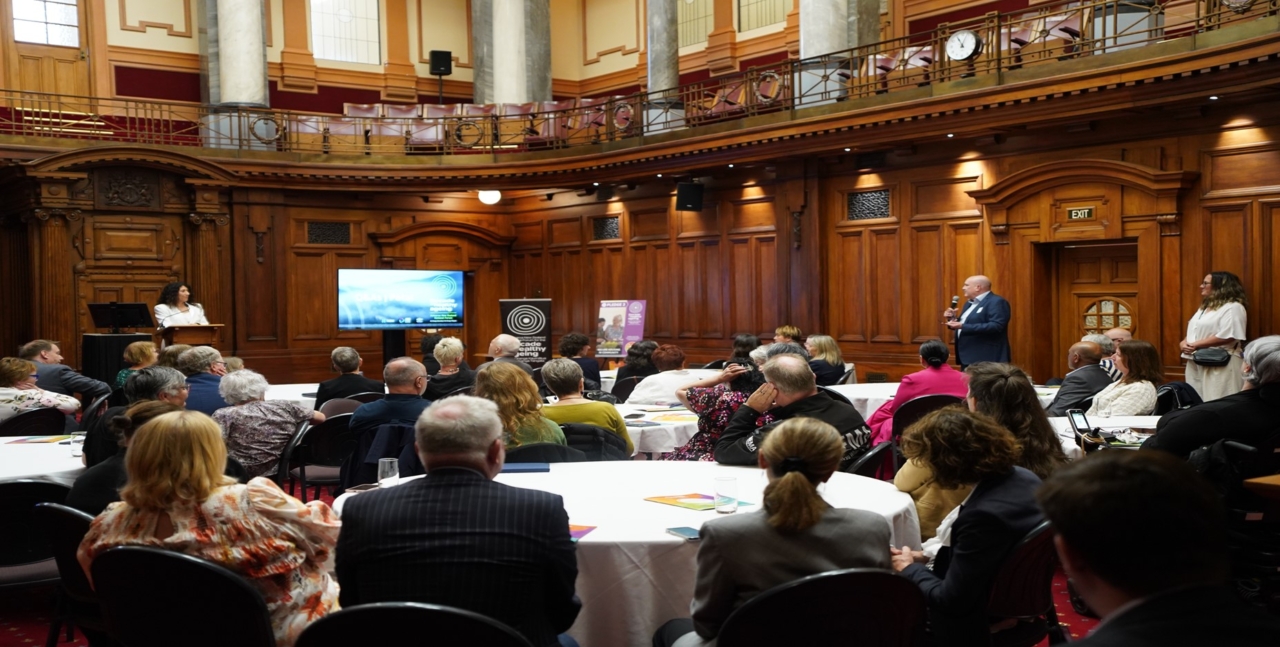
On 14 November the Retirement Commission released its 12 recommendations to ensure that our retirement income system is fit for purpose in the coming decades.
As our population ages and the patterns of work, homeownership, and caregiving shift, the system that supports us in older age must shift alongside it. The report and recommendations draw from a substantial body of research, and reflect a commitment from the Commission to a system that supports people across the lifespan to achieve security in retirement.
NZCCSS’s press release tied this commitment to a lifespan approach to the work of the IDEA Institute and their new report on ‘Kids Kiwisaver’ to encourage earlier savings. NZCCSS CEO Alicia Sudden spoke briefly to Newstalk ZB about the matter, and the press release was included in coverage by Waatea News.
‘Lunch and Learn’ with Alzheimers NZ
The Dementia Learning Centre has released a series of webinars to understand their innovative new learning tool “CarePlay”, as well as other advances in dementia design standards, research insights, and practice standards. This series has been running since October, and there are still two sessions remaining:
Mon 8 December: Dementia Design Development Programme (register here)
Mon 15 December: Train the Trainer (register here)
Rachel at Gerontology Conference
Senior Analyst Rachel Mackay will be presenting our work to date on the Older Persons Poverty Monitor at the New Zealand Association of Gerontology conference next week. If you will be at the conference too, make sure to stop them and say hi!

UNICEF calls for a climate safe future
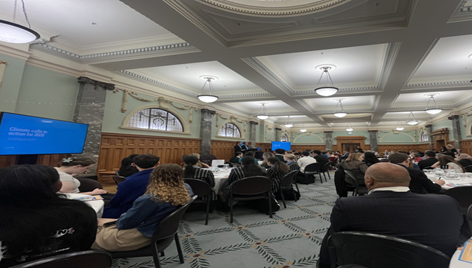
This year on World Children’s Day, NZCCSS CEO Alicia Sudden attended UNICEF’s Parliamentary Forum for Children’s Rights to hear directly from young people about their priorities. Rangatahi spoke strongly about prioritising climate action and called on members of parliament to take up this challenge.
Social investment funding
The successful applicants to the Social Investment Fund – Pathway One have been announced, with seven initiatives that will reach a total of 1600 children benefiting from this initial investment of $50 million in funding.
Successful initiatives are focused on a range of outcomes including reducing school drop-out rates and justice and care system involvement, supporting disabled and neurodiverse children who have been suspended or stood down from school and parenting support to help children reach developmental milestones.
You can find out more about Pathway One and these initiatives here.
Policy group in-person hui
NZCCSS’ Children & Families Policy Group held its in-person meeting in Wellington in November. The group was joined throughout the day by officials from Oranga Tamariki and the Social Investment Agency, as well as hearing from our host Missioner Murray Edridge, about the incredible work of the Wellington City Mission.
Policy Group members shared the value they gain from the connection and information-sharing this group enables. We look forward to continuing together in 2026 as we continue our focus on child poverty, child protection and middle childhood. NZCCSS thanks all of the group members for their contributions this year.
Exploring Middle Childhood webinar

Middle childhood is often overlooked in relation to other stages of children’s development. Find out more about our new report Te Kōrero mō ngā Tamariki – Exploring middle childhood in Aotearoa in our upcoming webinar.
This webinar will provide an overview of NZCCSS’ resource and specific aspects of middle childhood, as well as profiling initiatives from across our membership that support tamariki during this stage of childhood.
Wednesday 21 January 2026, 12pm-1pm
Presented by NZCCSS Senior Policy Analyst Melanie Wilson
Find out more and register here.
Do nothing out of rivalry or vanity; but, in humility,
regard each other as better than yourselves.
Phillipians 2:4
(Complete Jewish Bible)